Showing posts with label nanotechnology. Show all posts

Tuesday, January 3, 2023

The new integrated data security requires hardware and software-based solutions.


New nanotechnology makes it possible to hack computers, even if they are off the internet. The cyborg bug or small robot can carry a microchip to the microcircuit. And then, the system can put that microchip on the wire or microprocessor. 

The microchip can record and transmit information to the relay station that resends to the satellites or the internet. Even if that microchip doesn't have powerful data transmitters, the system can use a chain of miniature relay stations that transmit data to the drone or a fixed station that can be a cell phone that communicates with those microchips by using BlueTooth. 

Those microchips can also transmit electromagnetic impulses to wires. And they can use to deliver computer viruses or spyware to polluted computers. 

If we think of the traditional locking system. The AI can easily make copies of the physical keys. The AI-based camera just photographs the keys, and then it can measure the length of the key. The system can also use sonar or laser scanners. And then, it can transmit that data to the CAM (Computer-Aided Manufacturing) system. 

That system can involve a 3D printer and machine tools. There is the possibility that the attackers have laser systems that they can use to finish the job. Modern burglaries can work for governments. And in that case, they can have high-tech support systems. 

The fact is that the wrong microchips can cause a very bad situation. There is a possibility that those microchips are equipped with logic bombs. In that case, those systems can deliver computer viruses to the system. Or they can transmit information that flows through them to a third party.  

And even if those microchips don't carry malicious code to the targeted system. They can cause very big risks. If hostile forces know the resonance frequency of those microchips. They can use acoustic weapons to make physical damage to microchips. That causes oscillation and breaks the core of the microchip. 

The data security of tomorrow must base the solutions that are hard to break. When we think about things like electronic locks there is the possibility that in the future, cell phones with biometric recognition systems can use to open electronic locks. 

But when the telephone communicates with locks it must use a very fast algorithm. The recognition algorithm can be unique. And that makes it easy to track the device. That code is used for authorized access in physical or software-based systems. 

The burst of code, hidden in empty code makes it difficult to steal the key. When the telephone starts transmitting it sends an "empty code". Then the key code is hidden in that message. The next-generation systems are not just denying access. It stores the unauthorized keys in memory, and that defender can find out where the attacker stole the code. 


https://scitechdaily.com/the-security-system-of-the-future-electronic-devices-could-use-logic-locks-to-fend-off-malicious-attacks/


https://shorttextsofoldscholars.blogspot.com/

Monday, February 28, 2022

The soundwaves can use in fundamental 3D printing technology.


Soundwaves are carrying material. And that thing is not a very big surprise because sound waves are the movement of molecules. The thing is that there are also sound waves in the space. Objects like stars are sending material or gas impulses. And that means that molecular movement can observe by using radars. 

And turn to the sound waves. The gas or other particles can inject into the outer layer of the space structures. But the soundwaves can use in fundamental 3D printing technologies. 

But the fact is that the coherent sound waves can use in the new fundamental  3D printing tools. In that case, the plastic dust or small plastic particles can carry to a certain position by using coherent sound waves. That thing allows using the modified LRAD-systems for sending particles in long distances. 

In that kind of 3D printing system, the particles are riding with soundwave or soundwave-laser ray combination. And that thing means that kind of system can be the next-generation 3D printing tool. The vaporized plastic, carbon fiber, or steamed metal. The system can use to create more complex and sensitive structures than ever before. 

The soundwave-basing 3D printing system has one benefit. It must not make physical contact with the layer or object that prints. The soundwave can push and pull objects by creating changes in the pressure above the object. 

That system doesn't require a vacuum to operate. So it can use in biological printing processes. The system can use to create nanotechnological microchips. And a new type of proteins. One thing that is important in protein structures is the form of protein. 

The soundwave-based systems don't require contact with the chip's surface. That thing denies the deletion of programming of that chip. 

Also, this kind of system where particles are traveling in the sound-wave tunnels can use to make the complicated protein base structures. Also, artificial DNA can create by using soundwaves. The difference between the soundwave and laser systems is that the soundwave can work underwater conditions. That allows operating single cells that are living. 


https://curiosmos.com/scientists-have-just-found-sound-waves-can-carry-mass/


https://likeinterstellartravelingandfuturism.blogspot.com/

Monday, December 9, 2019

Stamps and security


Stamps and security


The intelligent components can make things more dangerous than ever before


In some spy novels, spies are putting microfilms or some electronic memories behind stamps and then send the data to their employers. This kind of thing is really interesting when we are thinking about things like national security. But by using modern technology the stamps can also contain very dangerous weapons, which can be deadlier than we ever expected.

If we are thinking about the case, that the stamp is covered with the wax, that is created by nanotechnology. In this case, the wax is created that only a certain person's skin bacteria can open it. And then the thing like nanomachines can slip in the body. But if we are thinking about the intelligent nanotechnology in the stamp or core of letter or postcard would be installed very thin microchip, what detects the fingerprints of the person, who touches that thing.

The thing is that nanotechnology allows creating very complicated but also invisible structures in things like paper. Modern lasers can split the paper horizontally, and then the extreme thin intelligent component can put between those layers. The entire layer can detect the fingerprints, and they can be got from cell phones. And when a certain person touches the card, that thing makes the computer to launch a weapon.

In the postcards can install the miniaturized mortars, which is looking like a honeycomb. They can shoot tiny capsules inside the body of a targeted person if the intelligent components detect the right fingerprint. Those capsules can involve biological or chemical agents. Or they can be the nano-submarines, what can involve pepsin, what those submarines will inject to certain cells. That molecule will destroy the mitochondrial in the cell. The thing is that those capsules might not able to detect by using regular sensors.

Then the nano-sized ventilates would open, and the system releases things like nanotechnical produced poison to the skin of the victim. If things like cytostatic are equipped with an enzyme, that would take those molecules on a certain targeted cell group, this kind of thing can cause very bad damages in brains or some other organ, in the very small dose. This kind of thing can kill one single cell in the organs like the liver, which causes death. If we are thinking about the ability to create extremely small explosive bites, that thing can make it possible that the system shoots the nanomachines inside the body of the victim.

Image:

https://upload.wikimedia.org/wikipedia/commons/3/31/Penny_Black_VR.jpg

Friday, November 8, 2019

Short writing about lasers

Short writing about lasers

What would you do with a laser, what is thinner than a single hair, but has the power of two megawatts? The new thing in lasers is nanotechnology. The laser ray forms in the tube, what is filled with medium, and the light, what comes from sides will make that ray in that tube, what is called as the laser element.

When we are thinking about the use of nanotubes, we could create an extremely small diameter transparent tube, which is filled with a medium like carbon monoxide, and both sides of this thing would put the laser-mirrors, one is fully mirror, and in other mirror is the small hole for creation of the laser ray. That would make possible to make kilometers long lasers, which would have the same diameter as hair.

Those systems must just surround by light sources, and they would make possible to create powerful energy ray to a very small point. Of course, that element can be made by using the red glass, which makes it the rubidium laser. Those ultrathin elements would put in the reel, and when the laser is needed the laser element, what is surrounded by the smallest possible LED lights, and then the system would create extreme powerful ray, what would be targeted to the very small area.

When we are thinking about carbon monoxide lasers and HO (Hydrogen Oxygen) or simpler saying water lasers, those systems would give their burst in two wavelengths. If we would make simple diamond glass, which means the crystal form of carbon or artificial diamond the laser would give only one wavelength of the light.

That thing could increase the power of the laser, and the thing is that normally laser needs the medium, where the light would scatter to both ends of the laser tube. That thing puts the laser light jump between mirrors, and when more light would be brought to the laser ray, it's energy would rise. But what if we would not use medium, and we would simply light the mirrors by using askew lights?

Would it increase the power of the system? Let's say that it would cause the formation of a very powerful light if we would make the light ray jump from mirror to another through a vacuum. In this case, the light would be targeted straight to mirrors, and then it would increase it's power the same way as it travels in the medium. The power of the laser ray would turn very high because the laser element would not be heated the same way,  how the tube, what is filled with medium would be heathen.

The temperature is the problem with the lasers. And if the element would overheating it would break laser. But if the light travels in a vacuum, there is no resistant and the temperature would turn lower than with normal lasers. Another version is to make the laser extremely long, where the big size would help to cool the lasers, and also the flowing water, what will flow around laser would keep the temperature low. In aircraft, the flowing air would handle the cooling. of the laser.

Miniaturized TR3B "Astra" and the use of advanced biotechnology in space systems.

Miniaturized TR3B "Astra" and the use of advanced biotechnology in space systems.

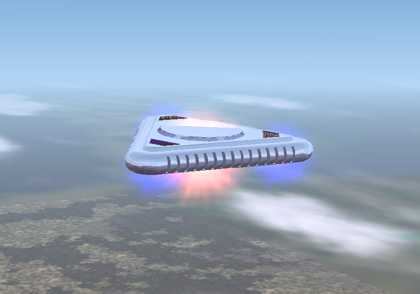
Image I


A couple of interesting pictures that are connected with this text are portraying the mysterious "Black Triangle-UFO" and the diatom, and this is a really interesting thing, that those forms are looking like similar. So what this might mean? Is this only coincidence, that some diatom and the triangle-shaped aerial vehicle have the same form?

That might be a coincidence, but if we want to write a little bit longer text, we might take another point of view for that thing. And that thing is connected with the words that "UFOs are not living and they are not dead". So what that thing might mean? Does that thing some connections with the diatoms, what are living almost everywhere?

Sometimes this kind of structure is planned to use in the extremely small-size RPVs, where inside it is the chamber, where is created the overpressure by using the small-sized pump, and then the ventilation of the jet pipes would control the flow of the air. The energy to that system would get from the high-energy radio-transmitters. So this system would operate like full-sized TR-3B "Astra" but it is far smaller. But what kind of things could diatoms do, if they would be genetically engineered, and the silicone would be replaced by titanium atoms.

Image II


When we are thinking about the thing, what is called "advanced organic technology or advanced biotechnology, there could be possible to make the structures of even the spacecraft by using the genetically engineered diatoms. That means that this kind of genetically controlled particle can have similar structures with diatoms, which have two layers of cells. The outer layer is silicone, and the inner layer is the normal cells.

In theory, the same kind of structure can contain cells, where the outer layer would be titanium or pure carbon or rather saying carbon fullerene. That means that the artificial cells can be covered by fullerene, what is produced in the small factories, and the artificial diatoms can in theory form the spacecraft. But if we are thinking sharply, that kind of system would need extremely advanced nano- and biological technology.

But this kind of thing is fascinating, because if we would have the ability to create diatoms, what has the group of atoms, what we want at the outer layer, we could even grow the spaceships in the flowerbed. And that kind of system would allow creating structures, which can fix themselves. But for making that thing successful, the creation of the DNA of those diatoms must be very sharply controlled. But maybe by using nanorobots and artificial intelligence, we might create this kind of system, what are half organic half non-organic.

Image I

https://www.micropia.nl/en/discover/microbiology/diatom/

Image II

https://media.moddb.com/images/groups/1/5/4418/tr3b_astra3.jpg

Sunday, October 27, 2019

The aviation of future


The aviation of future


The primary tool in the military and civil aviation is highly sophisticated artificial intelligence. The thing, that makes artificial intelligence so effective tool is that it can handle the robots, what are fixing problems and damages very sharply, but it can control the great entirety.

If we are thinking the artificial intelligence, that thing can make new aircraft more effective, even if there is old-looking aircraft. But as I have written before the human-shaped robot can also be used as the pilot of the aircraft, and that thing can turn every aircraft in the world to the drone. And it can communicate with controllers by using satellite communication, which could be internal or it can connect itself to the communication system of aircraft.

Below this text is the BAEs promotion video, what the aviation of tomorrow would look like. That kind of system might provide new kinds of advantages and opportunities, what is ever seen in aviation before. The nanotechnology will give the aircraft change to fix its damages, and the highly sophisticated artificial intelligence can make that kind of process without pilot even notices that there is some kind of damages. There could be so-called nano-latex, what is formed small machines, which could fix the holes autonomously.

Those mechanic spiders can walk inside the body of aircraft, and if there would be holes in the body, some of those robots would go to make the supporting structure in that hole, and rest of them would release the carbon fiber to that hole, and because of that the aircraft can continue its operation even if there are damages in structures. In some other, more conventional scenarios inside the body of aircraft would installed robot arms, which is equipped with 3D prInters, which can fix holes.

Those 3D printers can manufacture spare parts to vehicles and equipment, and in theory, they can manufacture entire cars and aircraft in operational areas, which makes those systems very effective for supporting actions near the operational area. They can be used to make almost every particle, which is needed for successful operations.

The modular aircraft can dock other aircraft wIth it Is also a really interesting idea. If we are thinking about the structure, what can connect and then separate parts of it for independently operated vehicles, we can think the opportunity to create aircraft concept, what can be used to every mission. If the pieces are together, that thing can use as the heavy strategic bomber.

But if the sub-parts of the plane would be released, they can act as well as the fighters and assault systems, and the thing is that this kind of system also allows replacing part of the aircraft during the flight. So if we are thinking about the use of that system in the military actions, those aircraft can carry heavyweight bombs to some area, and after bombs are dropped, those parts can be released and turn to very effective fighters. Also, those modular aircraft would be stored in smaller hangars, which will cover the existence of big bombers. This kind of new advantages might be more revolutionary than we ever thought.

https://youtu.be/Ia4Os7WkbEI

Friday, October 25, 2019

Caffeine, nanotechnology, and science

Caffeine, nanotechnology, and science

The chemical formula of caffeine is C8H10N4O2 (I cannot make down indexes with this program), which means that it contains Hydrogen, Nitrogen, and Oxygen, and those elements are boosting the chemical reactions in the cells. Nitrogen works as a catalyst in many chemical reactions, and hydrogen and oxygen increase the power production in mitochondria. In this molecule, carbon works as an inhibitor, and if we remove carbon from caffeine, it would turn to super caffeine. But the problem is how to handle that molecule. 

Nanotechnology allows developing new molecules

If we would remove carbon from this molecule the formula is transforming to H10N4O2 (N4O2H10), but the public database doesn't seem to have that kind of combination. Or at least it is not used not the medical industry. That might cause because of it's high reactive form.-This kind of thing would turn interesting if we would connect this hypothetical molecule to the enzyme, which would make the feeding system of the body transport its precise right cells, we could make "super caffeine". The idea of this kind of molecules is that the enzymes of cells are cutting them in the precise point. These kinds of molecules need special transporter in the body because they can react in the wrong place. 

But the thing is that if the last molecule is stable it would be very high reactive, and if we want to use it for some purposes, we must make stable conditions for that kind of chemical combinations. And if we want to handle highly reactive molecules, we must handle them carefully and the thing is that those chemicals might explode very easily. So how we could handle this kind of reactive chemicals? 

We must close those highly reactive molecules to the capsules, where is no reactive gas, and that kind of thing would make this kind of chemical true. This kind of system can be a really small size, and that means that those capsules could be so small, that they can be visible in the microscope. This kind of nanotechnology can revolutionize the medical industry. 

Tuesday, October 1, 2019

Another writing about qubits

Another writing about qubits

This writing could also be named as the "three electron problem", but the thing is that we have thought the qubit as the molecule, which would touch the frames of the gate. And as I have written before, the number of touches would mean a certain level or value of qubit. This is one way to think about the problem. But there is a couple of other ways to closing this kind of problem.

One of them is just using the modified tunnel microscope for making the qubit. The thing is that the scanning tunnel microscope is the stylus, which would hang ion or electron on the surface of the metering particle. So if we would create the transmitter, what would use multiple stylus or antenna, what would send multiple electrons at the same time, and that system would create the necessary value for the qubit.

And those antennas would target the gate, which might have very many frames. That allows the system to give qubit as many values, what the creator of the system wants. But of course, we would need to make very much work with this kind of thing, before the first fully functioning quantum computer would be possible to create.

But let's continue to think about the qubits. The thing is that the problem of the qubits can be solved in other ways, which might seem very different than using the normal cable, where those bits would travel in lines, which would make those computers more effective than any existing computer. And one of those possibilities for solving that kind of problem can be mentioned here.

The solution for creating the qubit could be the magnetic version of the bubble, which is filled with balls. In this case, the ball would be filled with electrons or ions. The value of the qubit would define by the electrodes, where the ions or electrons will touch.

So, in this case, the magnets would hover those particles, and the ball would be covered by electrodes, what would create the form, what looks like little bit longitudes of the map ball. This kind of system would look like miniaturized- or nano-sized map ball, and the use of nanotechnology or nano-sized mosaic on the structure of that ball would make this thing true.

This would be the so-called "stable solution" for qubits. The movement of those particles would be extremely short. And the problem is how to adjust the track of each particle. Of course, adjusting the track is not enough, and those particles must be controlled during their journey to electrodes.

The purpose of this kind of action would deny the possibility, that all of those electrons or particles are touching the same electrode. But even if the system would become operational there is much work left in the operating systems and programs. And at the beginning, the quantum computer would be the hybrid solution, where another traditional computer would be used to code commands to the quantum computer, which could return the answer thought the regular computer.

If this is the mode of the system, that thing would be used to solve extremely long calculations. That hybrid solution would be slower than a pure quantum computer. The thing would operate that when the calculation would input to the quantum computer by using the regular system, that calculation is away from the hands of the operator until the quantum system will return it. And that kind of system is unstable if the normal rules of computing would consider quantum computers.

Biotechnology and nanomachines

Biotechnology and nanomachines

As I have written earlier, there is not very much difference between biotechnology and nanotechnology. Nettles and medusas have cells, which can use as extremely thin styluses. And when we are thinking the axons of neurons, they could be used as the electric wires in the extremely small microchips.

The brain cells of the bugs are planned to use as the biocomputers of some miniature robots. The cell would put in the chamber, where is connected to the EEG-sensors, and that thing makes possible that the neuron can operate the robot or computer, which is connected to it. This thing would make nanorobots more independent, what they could ever be.

One snake has the poison, which molecule seems like a rotor. When this rotor would slip in the cell, it would start to rotate and destroy the internal organs of the cell. This thing makes that molecule very interesting because it can use also for something, what we might ever think. The thing in nanotechnology is that only the imagination is giving limits for this very fascinating part of the machinery. The nanomachines are operating like full-size machines but their size is extremely small.

If those rotors would be equipped with iron atoms, what is put on the outer corner of those rotors, and they are put in the metal ring, that thing would allow creating extremely small generators, which can deliver electric power to the extremely small nanorobots. Those robots would send in the human body, and then those systems might even fix the DNA molecule inside the cells.

Another very imaginational way to operate the nano-size generators is to slip them in mitochondria. That would give extra power to those cells' organs, and in theory that would make more power to muscles and neurons. But this kind of thing is fantastic and as well as dangerous thoughts because we don't know, what will happen if we would create more electricity for cells of the human body or nervous system.

But when we are thinking about the use of nature with nano- and mini technology, there are some very interesting things in the vegetables, which can easily be used for nanotechnology. Those things are the injection hairs of the nettles, what can cut and then empty from the formic acid. That hair can be used as an injection stylus in some cases.

The thing in the use of natural materials in nanotechnology and it's instruments is a very interesting opportunity. If we think things like harpoon cells of some medusas, those things would be suitable tools in nanotechnical purposes. They are easy to collect, but the problem is that they are poisonous. But also benzene, what can be used in the nanotubes is really poisonous and highly carcinogenic material. Those cells can be used as the injection and transfer parts of extremely small parts of robots to one place to another.

Tuesday, June 25, 2019

Writing about transhumanism

Writing about transhumanism 

When we are talking about genetic engineering, we must realize, that even if we would deny that technology by law, there is always states, what allows this kind of research. And the persons, who are working with this kind of things can operate even from the opposite side of the Earth by using remote-controlled robots. That means that those persons must not even leave their homes even if the laboratory would be somewhere in Central America.

Genetic engineering allows us to order the gender of the fetus by using nanotechnology. That thing happens by removing of increase the Y-chromosome in the nucleus of the fertilized egg cell. The Y-chromosome could suck away or it can inject in the egg, which gives really interesting things in the mind of people, who are working with the pure-line refinement of the fastened evolution. The ability to remove or increase that chromosome makes possible to clone individuals, what have different gender, but the same genetic code.

That will make possible to create absolute pure lines of the individuals. Transhumanism is the thing where human would get "improvements in the body by using genomes or by using technical solutions. In both cases, the nanotechnology gives ultimate tools for that kind of work. The idea of using nanotechnology for increasing the level of intelligence is quite a new idea.

When we are thinking about nanotechnology as the increase of the capacity of brains, we can think that this can connect neurons together by closing the hole between them by using little wires. This thing would make the brains faster and more effective because the electricity would work without neurotransmitters. In this case, the nanotechnology can also increase the number of axons or it can make the neurons connecting to itself.

When we are thinking about the number of neural connections of the human brains, there are billions of connections between neurons, but when we are thinking about the theoretical case, where the single neuron would get trillion of connections to itself, we must remember that nanomachines or nanotechnology can mean a line of the atoms.

This means that there could be only a line of the carbon or metal atoms in the U-shaped forms on the outer layer of the neurons. This kind of things would be invisible in tests because nanomachines themselves are not reacting with other chemicals. When we are thinking about the nanotechnology, that thing what is used for boosting the brain capacity can look like some kind of tree. That system can block and control the signals, what are traveling in the brains.

Normally it cannot install to the brains, but if we would use nanomachines for that action it would become true. This means, that if we would create the extremely thin structure, what can assembly itself, those machines can inject to the body, and then they would create that form automatically.

This kind of things has given an idea to take the unused areas of the brains in use for the innovation process. We know that human uses only a couple of percents of brain capacity. And that means that we could use electric stimulation for increasing the brain capacity by stimulating those unused brain areas by using electric impulses.

That kind of technology can multiply the brain capacity what is used to solve some problems. This means that the microprocessor controlled intelligent network would stimulate multiple areas by using the electric signals what is coming from certain brain areas. In computer technology this solution as the parallel computing process. In this solution, much central processing units are handling the same solution.

Friday, June 21, 2019

The strange detail in one painting, which might inspire the creators of nanotechnology

The strange detail in one painting, which might inspire the creators of nanotechnology


I have introduced this painting somewhere else, and as you see it is similar to other "Totentanz" images, and maybe it is painted for the warning, that everybody can be the informant. And the time, when this image has been made was The 30 Years War. When the war was going on, both sides used informants for delivering the information to other side movements. This war was a religious war between the Christian world. And it was a really bloody campaign. And the first time the ordinary people faced the violence of the war.

But there is one detail, what has caused the inspiration for some science fiction writers like Isaac Asimov.  The detail is the nun, who stands at the front of the window, and talks with another skeleton.  

Asimov created the idea for one of his books by using the idea that the entire planet would be covered by the intelligent cells. The Asimov's idea was that the dominating species of the planet was the swarm of the bugs, what would not be intelligent alone. But when the swarm is acting together it will able to get any form, what it wants. Maybe he got the inspiration of that kind of things from this kind of things.

The idea of nanotechnology is the same as the Asimov's species of intelligent bugs. The thing is that the nanotechnology can create big structures and the form of the nanomachines is similar to living cells. They can look like some thready bacteria, and those small size wires would be the hooks, what is keeping the machines or structure in one piece.

Each of those machines would be controlled by the microchip, that knows it's placed in the structure. Microchips are communicating together by using WLAN, which makes possible to separate and reform the structure.

That figure of nun seems to rise from the ground and dust. When we are thinking about the nanotechnology and extremely small machines, those things can make the form of a human. If the system is created by using the machines, which are made by using silicone. The result is something, what seems like a human.  Or everything else, what the system would want that creature to portray.

Wednesday, June 19, 2019

The little writing about the nanotechnical polymer, and the abilities of that material.

The little writing about the nanotechnical polymer, and the abilities of that material.

This nanotechnical material would consist of two components, the wax, where are the nano-sized springs. And the primer, what contains the molecule-sized tweezers. 

We might call this material as the real-life "Turtle Wax". It would be the polymer, which can be spread on the layer,  and that thing is so easy to use, that it would be like waxing the car. But this material would give the layer extreme strength. The idea of this material is that there are nanotechnical springs in the polymer, and when the layer would be magnetized, all springs would turn to the same direction.

The nanomaterial gets its strength because it involves those nano-sized springs. At the end of those springs is an iron atom, what makes possible to put those springs in a certain direction. This means that, when the wax or nanotechnical polymer would put on the layer, the piece would be magnetized, and that makes those springs turn in the right direction, as I wrote earlier.

The idea is to benefit the magnet to turn the springs in the right position. And the molecule size tweezers could keep them in the right position after the magnet field is removed. 

Because those springs would receive the hit, that would make the layer extreme hard. And that thing would give a change to avoid scratches of the automobile if that thing is parked in the place, where scratches are usual, but this material would be used to cover every layer, what wanted to cover.

The idea is that the magnet would be behind that layer, and the thing is that the spring could connect to the layer by some other ways that use magnets. This means that the molecule-sized springs would turn in the right direction, and then the paint, what might spread under the "turtle wax" would be equipped with the small, molecule-sized tweezers, what will touch to those springs, when they are in the right position. That would make sure, that the wax is stabilized on the layer.

Saturday, June 8, 2019

How to make a single neuron intelligent?

How to make a single neuron intelligent?

1. As we know connections would make human intelligent

If we would think the human brains there are 100 trillion connections with neurons. That is about 1000 times the number of the stars of our galaxy, and that would limit the ideas to create single cells, what have the same level of intelligence with human brains. Making those connections is difficult because the size of those neurons is so small. But there is a possibility to create more area to the surface of the neuron.

That thing is to put the neuron in the bag, what is made by using electric conducting silicone. That will be possible to install the carbon wires to that structure, where the neuron will equip with a microchip, what denies the need for food because the cell organs have been removed.

2. The artificial neuron can base the combination of neuron and silicone

Then the silicone-cored neuron is connected to itself by using carbon chains, and the system would increase the electric power inside the silicone, which makes the electric signals enough powerful, that they would take the place in the surface of a neuron. The idea of this thing has taken from the bug, which has extremely powerful brains because their neurons are connected to themselves.

There has been introduced the ideas, that the level of intelligence can increase by using nanorobots, what would act like worms, and those worms are creating more connections between neurons of the human. Those nanorobots can be the carbon-based material, which would increase the number of connections between neurons. They can slip in the human body from pills, and then they can go precisely, where they are needed.

3. Nanotechnology could increase the level of intelligence by making more connections between neurons, or nano-machines could connect two neurons together as neuron loop, where the electricity rotates between those neurons. 

Or sometimes have been thought that there is no need more than the silicone itself. But when we are thinking about the thing, what can revolutionize the biotechnology is the ability to create "neuron loop". The "neuron loop" is the thing where two or more neurons as a circle, where electricity will rotate in the ring of those neurons, what are connected together, like the axons move signal in the one direction in this form

Those neurons would like to rotate the electricity between together, and that allows creating the small size-organism, which has an extremely high level of intelligence. In some scenarios, this kind of connection can form in the nervous systems of the bugs like wasps. And that would give interesting things to people, who are making horror movies.

Wednesday, May 29, 2019

One very big threat, what nanomachines can cause is that they are very effective weapons

One very big threat, what nanomachines can cause is that they are very effective weapons

When we are talking about miniaturized weapons, we ever think, what kind of threat is nanotechnology in wrong hands. If we want to connect those nanomachines to the algorithms, what are used to track people on the net, we are facing new kind of threat. Sometimes people would not realize, that nanomachines can make people's horrible imaginations true.

The idea of use the nanomachines to strike to some target is simple. The algorithms just locate the Internet socket from the network, and then the nanomachine would start to move to it by using the Internet cables, or actually the empty space between cable and insulator, and then those machines can make a physical threat to the target. In the worst cases, those nanomachines would be equipped with small tanks of some poison gas.

The artificial silicone amoebas can carry also nuclear weapons

Or they can be filled with the small bites of some highly radioactive elements like Einsteinium. When those bites would pull together there would be a nuclear explosion. And those robot amoebas might have also Lithium or Deuterium stored in that structure, what causes the same effect with the hydrogen bomb, and this makes them extremely dangerous. Those intelligent structures what can change their form would make nuclear weapons even more flexible and effective than they ever been before.

In fact, those machines would slip in the nuclear research center, and then they can break some pumps, or slip in the bodies of the researchers, and lock the blood veins in the brains or heart. Actually, those silicone amoebas can make the same things to any place, where is the internet socket. The way how those machines do that is that they are just following the data, what goes in the cable by using the light cells.

This can make Stanislaw Lem's Sci-Fi book "The Invincible" true

Or they can ping the target computer, and then they would find out the location. But what if the target uses the mobile Internet connection? If the connection of the targeted net use is happening in some certain place simultaneous, those nanomachines what can be miniaturized quadcopters what will point the target by using the electromagnetic radiation, what makes the electric arc in the target.

Those quadcopters can be dropped in the area, and when the connection, what is targeted would begin, the quadcopters would just fly around the targeted person's head, and then the electric arc will terminate that person. The idea of this system has been taken from Stanislaw Lem's book  "Invincible", where small pseudo-bugs or nano-copters makes that kind of thing to people who are landed on that planet.

Monday, May 27, 2019

T-1000 explained (What nanotechnology of tomorrow will make)

T-1000 explained (What nanotechnology of tomorrow will make)

Nanomachines operate as a team

In the future, this kind of machine could be possible, and that's why I'm writing this text about robots, which can transform their shape. In "Terminator" movies we have seen the "liquid metal killing machine", or T-1000. When we are thinking about the nanotechnology, what that machine is forming, we must actually think that this kind of systems is made by the nanomachines, what are actually feeling like quicksand.

Those nanomachines would have silicon solar panel or some other system to take electricity for the structure, where multiple nanomachines operate like one structure. Those systems can load their batteries by using sunlight, connecting themselves to the power plug or using fuel cells. That will guarantee the power supply to the robot.

Nanomachines would create a bigger structure

Those nanomachines are equipped with the microprocessor, which allows them to connect themselves together in one certain structure. Every single nanomachine knows its place, and that thing would allow them to take any structure, what they want. That would make possible to make things like eyes to that machine.

Those machines can form body parts like fingers and the magnet rail for the ion cannon in its hand. In the ion cannon, the nanomachines would be equipped with high power magnet rail and system what makes ionization possible. The idea is that those machines are operating as the team, where every single part has own role.

Nanomachines can connect other materials

And why those machines would have the clothes on? The nanomachines can cut the cotton fibers to the small bites, and then connect them back in one structure. Why the living target, what form the T-1000 takes will be terminated.

The nanomachines would fill the target because the terminator needs a certain form of the target for making model it. And in that process, the computer uses technology, what causes tissue damages. Of course, the computer would be programmed to terminate the target for security reasons. But the main thing might be that the nanomachines slip in the target.

Sunday, May 26, 2019

Biorobots and the transhumanism

Biorobots and the transhumanism

Technology, what is straight from Lucifer's handbook

Transhumanism or the technology, which connects the human to the machines can be the thing in tomorrow's world. It could be used to create the robots, what are actually humans, whose nervous system has been replaced by a computer. And that kind of robot zombies can be used in many things, like covert operations.

This kind of systems might turn the person to the robot, what has not own will at all.  If those nanomachines would slip in the fetus when the mother is waiting for new baby, that thing would help to make a real and perfect identity for the robot, what will control by people, who would not be good. That thing would cause that this kind of "agent" would slip in the high-rank position in the government.

In fact, we are thinking that robots cannot grow. Here I must say that in real life some technically advanced direction can create the bionic robot, what can be actually like a human being. One version is to create a group of nanomachines, which can replace the nervous system of a human being. The system would put itself in the brains, and those nanomachines can use wireless communication. They would just replace own electric operations of the neurons.

This technology would be really devastating in the wrong hands


Those nanomachines would be equipped with microchips, which will send the control signals to the nervous system. And the system can use the bionic energy to work. That kind of system would slip in the body of the fetus, and this would be real "Lucifer's technology", then that robot would act like a normal person, and even go to university.

There would be a good chance to make an impression in the election tests, if the controllers of the system access those nanomachines to the Internet database, and that kind of thing would make sure that the "right person" would get in the university, and then the high-ranking position in the industry or government.

When we are thinking about the situation that some military leader would "changed" on the battlefield, the thing would be quite easy to make in theory. The combat robot just shoots one combatant and then uses the electric shocks to keep cardiac in the action, Then the system would put the microchips or micromachines to the skin of the victim, and then those machines can take a person under the control.

Friday, May 3, 2019

HIV and some other viruses can soon be the history

HIV and some other viruses can soon be the history

https://kimmoswritings.blogspot.com/

HIV and some other viruses can soon be the history

The modern medicines can make possible to transfer some of the deadliest viruses to history, and when we are thinking about the war against HIV, we might say that the science, what is behind the research and development process of the modern antiviral medicals can benefit also creating the counter actions and cure against other viruses. The antiviral medicals could be effective also against other viruses, and the thing is that this can be the biggest victory in the history of mankind. One of the most fascinating things is to use the adipose molecules for the cure against viruses, and the way to make that thing would be used lipids as the little bags, what will close those viruses inside them, and then those lipids would just remove from the body.


That thing would seem a little bit too futuristic, but if we would think that thing in the point of view the nanotechnology, that process would be done that in the adipose molecules or very small drops of that material would connect little bite of metal, what allows to control those things inside the human body by using magnets, and the drop would be equipped by small chamber. Then those adipose balls would pull inside the human body, and when they are facing the virus, that thing would close in the bag, and remove from the human body.

Nanotechnology would give a futuristic solution for medicals


That thing bases the idea, that the ionized ring-shaped molecule could keep the hollow chamber door open by using magnetic pulling force with the same polarity of electricity, and when the virus would slip in, the door or hatch would close, because the electricity of the molecule is removing. The adipose balls would be far smaller than the cells, and they can be very effective if we could someday control those things.

Also, the bigger adipose drops can be used to close the cells, what are infected be viruses to the bag and remove them from the body. That thing bases that in this drop would connect the enzyme, what would target those machines to the infected cells. The nanotechnology would in the future allow to create very small robots, what could remove the virus genomes from the nucleus of the cells. Nanotechnology would be a fascinating tool in the medicines because they can destroy viruses and also those nano-drops could remove bacteria from the body as well they do with the infected cells.

Saturday, April 27, 2019

Robots of tomorrow would eat the same nutrient with animals

Robots of tomorrow would eat the same nutrient with animals

https://kimmoswritings.blogspot.com/

Soft, silicon core robots can act like amoebas.

Nano-size fuel cells, what is looking like mitochondrial have given ideas for creating artificial cells, what would be made by silicone. Those mitochondria could also connect to normal cells. The soft robots would use special fibers for movement. Those fibers can be controlled by magnets. And they can be carbon fibers, where is the iron bites. Or in a simpler solution, the silicone bag would be filled with liquid, that reacts to magnets or electricity. That means that the electrodes, what is installed to those cells would change the form of the core.

This is how natural amoebas would move in nature. If we would use the thermoelectric element we could send those robots to search volcanic areas and especially geysers and hot rivers. They could be very useful in that purpose because they could use external temperature as the electric source. And the silicone layer would protect the electronic observation systems from the other heat.

The electricity would get from artificial mitochondria. The nucleus would be removed and replaced by using the microchip if the machine is created by using natural cells, but in the thing would also be the single silicon bag. The microchip what controls that machine would use the thermoelectric element for creating electricity.

Robot what eats normal food would revolutionize the robotics

In theory, they could use ATP-synthesis for creating temperature, which makes thermoelectric elements for creating electricity to the small microchip. ATP is the normal power source for natural cells. And the thing will allow using normal nutrient for those robots. That kind of thing would make those things more independently and sophisticated. The softcore artificial cell would have many usages from the medical to scientific and military purposes.  Those soft robots can search the blood veins or digestive tract of the animals, and search what the fishes eat, and what influence the pollution would have to those species.

They can slip in the human body, and clean the blood veins, and in this case, the silicone bag would have a rough surface. If the system would work perfectly, it can wipe out the plaque from the veins, and make the blood run perfectly. But those machines can also close blood veins to the tumors. The problem is that those systems would be used also in military purposes. They can close the blood veins to the brains, and that would cause the death immediately, or the person would go unable to operate.

Wednesday, April 17, 2019

What could we do with bacteria, what can take a certain form?

https://kimmoswritings.blogspot.com/

1. What could we do with bacteria, what can take a certain form?

In the nanotechnology, the living organism and machine would be connected together. In the real world, the bacteria can be used as the nanomachine, which would be used to form the wires on the electric components. In this case, the bacteria can be put the small piece of metal, and then those bacteria would travel in the nutrient lines, what are put on the electric circuits.

That means that the bacteria would be dropped on the bacteria and the electric wires can be drawn to the surface by using a pen, where is the nutrient. And then the rest of the bacteria would die, and the bacteria that are in the place of the nutrient lines would stay alive. And then those bacteria would be killed, and the metal bites would form the electric wires to the component. Those metal bites would look like a little string, and when the bacteria would die, the rings will touch together.

The idea is that the only bacteria what is on the place, where is the nutrient can touch the layer, and the rest of those bacteria would wash away. That means that in the place of the nutrient must get a rough place because the bacteria must take contact on the layer, and then hold on that surface.

2. String looking metal bites would form the wires on the components when bacteria would die

The component itself would cover with varnish, and then the nutrient or bacteria, what would be in the place, where is the nutrient would melt the varnish away from that place. The problem is to create the layer, where bacteria can wash away if they are not in a certain place on the component, where the wire must be formed.

The thing would be made by using layer, what would be slippery, but the nutrient would make the bacteria create the acid or the nutrient itself contains the enzymes or some other chemical, what will break the surface layer, and uncover the rough surface under that varnish. The bacteria can touch that layer, and then they can be terminated by using the UV-light. The metal bites would look like little string, and when the bacteria would die, those metal bites would touch together, as I wrote at the beginning of this text.

3. Did František Kupka try to teach bacteria to take the form, what that man draw?

The famous avant garde-artist FrantiÅ¡ek Kupka (1871-1957)  had one little hobby, and that thing is that this man was very interesting about science, and he owned the microscope. Also, that man created bacteria cultures, what he observed. We all know that persons like Kupka are really interesting, and they might have interesting ideas, and maybe Kupka used the nutrient for making bacteria grow in a certain form. When we are thinking about that man's final work, there are interesting years below the signature, and they are 1913-1957, and there is a possibility.

That the man kept some bacteria cultures in the isolated dish, where they would create the own population, and that kind of tests are actually very dangerous. The reason for that is that those bacteria would degenerate in that isolation, and that thing would transform the genomes as the way, what could transform those bacteria very dangerous.

3. Never do this at home

Because if the multiple bacteria species would be in the same culture, they would change genomes, and in that process, the bacteria would transform in the very dangerous form. In that process, the core antigen of the bacteria can remain looking like the harmless bacteria but the genomes would be the dangerous bacteria. The thing is that the immune system would recognize the bacteria by its antigens and if the immune system would not be warned by the antigens, the bacteria can destroy the entire body of that victim, and the immune system would not even react to that attack against human cells.

If we would act and think the using the extraordinary methods as Kupka did, that man might be tried to make bacteria, what would follow the forms, that this man draw. Here I must say that the testing some things doesn't mean that the test would be successfully completed, but maybe Kupka put the nutrient in the certain forms in the dish, and maybe he got ideas of those forms and colors, what the bacterias take in the culture medium.

Monday, April 15, 2019

A high-tech version of Dracula can be based on nanotechnology.

A high-tech version of Dracula can be based on nanotechnology.

The nanotechnology could make possible to make some extraordinary things. Have you seen the movie "Dracula untold story"? When we are thinking about this character, what transforms into the cloud of the birds or whatever they are, and destroys the entire army alone, we might think some kind of magic event behind that thing. Or then we might think that the thing or the "vampire count" would be a similar thing like some T-1000 in the movie "Terminator". In this scenario, the person drinks silicon-based nanomachines, which would replace the cells of the body by the nanomachines, which would be made by using carbon and silicone and equip with nano technically produced fuel cells.

That system would not stand the sunlight, because the temperature in the fuel cells would rise too high, and the energy production causes the thing, that the structure is melting, and that would explain why this high-tech Dracula cannot walk under the sunlight. The thing is that nanomachines are really flexible, and the idea of those machines is that they have numbers. The idea is similar like in the restoration of some buildings. Every stone would be marked as the number, and then they would put back in the same order as they were removed.

Every each nanomachine would take the place in the structure in similar ways. In their microprocessors would be programmed that some nanomachine would have number 145, and the certain numbers would be around it. Then the nanomachines would find their place in that structure.  The thing is that the structure is forming by two kinds of nanomachines. The nanomachines, what will take their part in the shape of the body, and the flying bugs, what are carrying them, when the structure wants to transform to the cloud.

Every nanomachine knows it's placed and the structure knows exactly, what nanomachine must be next to each one. When we are thinking about the cloud, what will destroy the entire army, that thing would be simpler to create, than we ever can imagine. The idea is that in the structure of the man is only the part of the nanomachines, and the rest of them are following that group for serving as a reserve if some of those machines would be damaged. The thing is that every part of those machines must not do everything.

There would be the flyers, what would look like some kind of boxes, or maybe there could be artificial insects, what would catch the nanomachines, what is forming the man-shaped structure in their cargo-bay, what would be like "stomach". And then they would put those nanomachines back to the right place when the character would want to transform back to the shape of the man.  When we are thinking about artificial intelligence, those machines can connect their computing capacities together, and the cloud can also communicate with those nanomachines, what is creating the structure, what seems like a man.

In the ideas, that kind of structure would be very good at things like chess, and the reason for that is those nanomachines would communicate together, and form the extremely large and extraordinary structure. The thing is that the computing of those machines based the cloud technology, what is tested in the swarms of quadcopters. Those swarms of extremely small machines can operate as the group, which will make some things independently, and the thing is that that equipment would be a very effective tool in the world of the intelligence and military, and maybe they would be true in some day. Sometimes I have thought that maybe someday that kind of robots are in use of military, and in the wildest imaginations they might have even infrared LEDs, what would make possible to create structure, what would look like a human in the infrared cameras.

Computer researchers published a new algorithm that revolutionizes web management.

The new database structures require new and powerful tools to manage databases in non-centralized solutions. The new data structures can be ...