Tuesday, February 6, 2024

Computer researchers published a new algorithm that revolutionizes web management.


The new database structures require new and powerful tools to manage databases in non-centralized solutions. The new data structures can be in large areas, and parts of them might be in different computers. This kind of network requires very good management. And fast reactions. In modern computing infrastructure networks play a vital role. When the system collects data from multiple sources, it should observe that data. That left from the source is the same in destiny. 

In old times TCP/IP-protocol there system sent checksum or every data packet back to sender to compile that it's not changed is powerful. But when things like AI should collect data even from millions of sources, and then the system creates a new entirety. In that process, the TCP/IP is a too-slow protocol that can handle millions of bits that come from multiple sources. At the same time. 
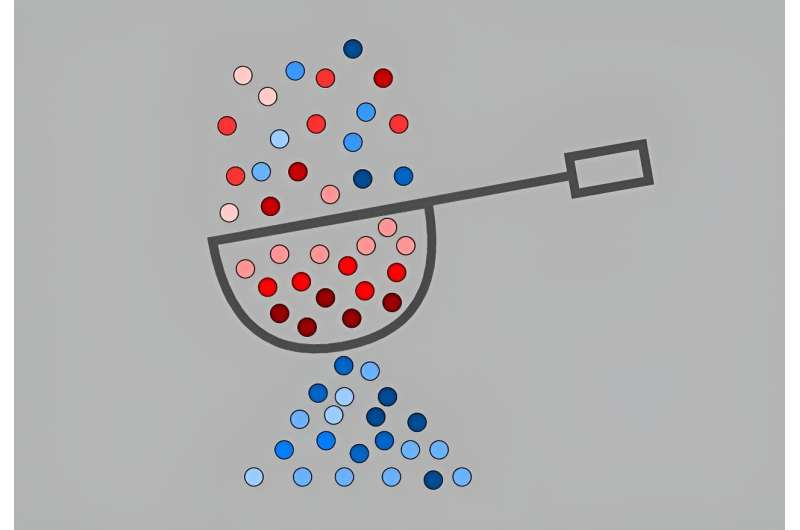

"A logo for SIEVE, created by Yazhuo Zhang, portrays hotter objects in shades of red and colder ones in shades of blue. Zhang also designed a web site for SIEVE, including a motion graphic demonstrating how it works. Credit: Yazhuo Zhang"


You can see how this new algorithm acts. The idea is that the system gets the command "select red balls". Then, the system just lets red balls through the filter or cache. The system keeps "red "or "hot" balls in place, where users can get them fast. The blue or "not so "popular" objects can let go somewhere where they don't fill the cache. So the system stores only "hot" data packs in the cache, and the system can put the rest of the data packs in hard disks. 

The antivirus can also use this methodology. The antivirus can put its mark on data packages that it checked those data packages. The system can program those files that travel in it will not open until the antivirus checks them and puts the "pass" mark on those files. 

************************************************************


"Cache-eviction algorithms determine what objects to toss and when to do so.


Computer scientists have developed a highly effective, yet incredibly simple, algorithm to decide which items to toss from a web cache to make room for new ones. Known as SIEVE, the new open-source algorithm holds the potential to transform the management of web traffic on a large scale.

FIFO, or “first-in, first-out,” is a classic eviction algorithm developed in the 1960s. Imagine objects lined up on a conveyor belt. Newly requested objects enter on the left and the oldest objects get evicted when they reach the end of the line on the right.

In the LRU, or “least recently used,” algorithm the objects also move along the line toward eviction at the end. However, if an object is requested again while it moves down the conveyor belt, it gets moved back to the head of the line.

Like LRU and some other algorithms, SIEVE makes a simple tweak to the basic FIFO scheme.

SIEVE initially labels a requested object as a “zero.” If the object is requested again as it moves down the belt, its status changes to “one.” When an object labeled “one” makes it to the end of the line it is automatically reset to “zero” and evicted.

A pointer, or “moving hand,” also scans the objects as they travel down the line. The pointer starts at the end of the line and then jumps to the head, moving in a continuous circle. Anytime the pointer hits an object labeled “zero,” the object is evicted.

'

The last part is from the ScitechDaily.com/ Revolutionizing Web Caching: Computer Scientists Unveil Simple Yet Game-Changing Algorithm


**************************************************************


Keeping ‘hot objects’ handy

Many people understand the value of regularly reorganizing their clothing closet. Items that are never used can be tossed and those that are rarely used can be moved to the attic or some other remote location. That leaves the items most commonly worn within easy reach so they can be found quickly, without rummaging around.

A cache is like a well-organized closet for computer data. The cache is filled with copies of the most popular objects requested by users, or “hot objects” in IT terminology. The cache maintains this small collection of hot objects separately from a computer network’s main database, which is like a vast warehouse filled with all the information that could be served by the system.


The last part is from the ScitechDaily.com/ Revolutionizing Web Caching: Computer Scientists Unveil Simple Yet Game-Changing Algorithm


********************************************************************

Separating "hot objects from data flow makes the system more effective. The system can transfer widely used data objects to another cache there is not so much data. Or it can transfer the most used data packages even to the workstation memories. Whenever a computer searches data that thing takes a couple of seconds. But what if there are billions of data packages stored in a cache, and the system always must search them by one to one? In large networks, there could be even thousands of queries all the time. 

The SIEVE can also make networks faster because it helps to detect data packs that net protection programs like antivirus handle. The antivirus puts a mark on the data pack. And that mark allows programs to open the data pack. If there is no mark the data pack will transfer back to the antivirus. 


If the antivirus doesn't check all things that travel in the network. That can cause malware infection.  The antivirus can also put its mark on the data packs that it checked. That denies the ability to slip non-checked data inside the network. 

 The thing that makes this new algorithm effective is that it marks the data bite to value zero while it travels in line. And then SIEVE returns in value into one. when it's the end of the route. This thing helps things like antivirus programs separate data packages that are already analyzed. In this model, the "zero" means "don't touch". And the value one means that the system can catch the data pack.


https://scitechdaily.com/revolutionizing-web-caching-computer-scientists-unveil-simple-yet-game-changing-algorithm/


https://techxplore.com/news/2024-01-scientists-simple-method-cache-sifting.html

Thursday, October 19, 2023

Railguns: the next generation of weapons.

 Railguns: the next generation of weapons. 


Japan made its first railgun test at sea. 

Things like drone swarms require new types of AA systems. Those systems must shoot down high-flying multiple targets with low-cost ammunition. Railguns are weapons that shoot projectiles in the speed of Mach 3 or higher speeds. The famous GAU-8 "Avenger" cannon's ammunition hits the target with a speed of Mach 1,5. And that weapon destroys any tank. 

The improved laser-based anti-missile systems can also destroy missiles that attack the ships. And also modern tanks have active defense systems that can destroy the incoming rocket projectiles. The railgun ammunition is small and it's hard to destroy. 

The railgun gives warships and other military vehicles the ability to shoot air-ground and sea targets with the same weapon. The rate of fire of the railgun can be very high. Chinese navy tested a hypersonic railgun with a very high rate of fire. These kinds of weapons are tools that can shoot down even satellites. The hypersonic machine cannon or "super GAU-8 can sweep bunkers and defenders from the beach. 

In the case. Where the railgun has a very high rate of fire the air cone behind the ammunition might not have time to close. And that means the ammunition travels in an air tube. And they can be deadly surprises for high-flying aircraft or even satellites. 


The laser-booster 


There is a vision that the railguns will hybridize with the laser systems that can push ammunition to space. The laser rays can be used to push the projectile forward after they are left from the railgun. 

These systems can shoot small satellites to at least LEO (Low Earth Orbiter). The laser system can connected with a railgun. And it could shoot small rockets to high altitudes, where they can start their engines. The same systems can also shoot 155 mm. GPS-guided ammunitions to extreme long range.

"Project Babylon"


The supergun that could reach space is one of the most interesting things in history. The famous Canadian engineer Gerald Bull created the Project Babylon. Bull's dream was to create a gun, that could shoot satellites into space. That man became famous, because he sold a supergun to Saddam Hussein, and the end of his career was that somebody killed him. 

That cannon is one of the most interesting things in history. These super cannons can also shoot grenades like 155 mm GPS-guided ammunition in ranges that are impossible to regular cannons. Modular structures like automatized drone technology make it possible to assemble even the longest barrel near the operational areas. 

The supply system can deliver cannon to the operational area in pieces. And then crew or robots assemble those pieces in that area. The drones can also used to elevate extremely long barrells. In the film, the cannon is mounted to train. But in visions, it can be on a group of tucks. 

Shooting satellites to orbit by using a regular cannon was not a very good idea during Bull's lifetime. The recoil breaks electronics. But modern flat microchips can stand the acceleration of the cannon ammunition. And that makes GPS-guided grenades possible. But there is a possibility to put a magnetic spring to the nose of the cannon. Engineers can install magnetic accelerators to cannon tubes. And that also gives regular cannons more firing range than regular cannons. 

The drones can pull this magnetic spring outwards. And the lightweight materials make it possible. The magnetic spring can be very long. When the cannon is not in use those drones will lay that spring down. And it can be packed in a small space. Also, there can be a turbine at the nose of the cannon that makes the whirl that makes air thinner. The system can also shoot rockets. Designed to carry ASAT weapons that make it possible to keep recoil lower. The magnetic-assisted cannon shoots that rocket to the maximum altitude. And there it ignites its engine. 


https://www.thedrive.com/the-war-zone/japans-railgun-performs-first-test-firing-at-sea


Wednesday, October 18, 2023

Killer drones are effective tools.

 Killer drones are effective tools. 


The drone can operate two ways on the battlefield. 


1) The drone can point targets to other machines like artillery and aircraft. In that case, the drone sends its location to fire control. Then it measures the distance and direction of the target. That data allows the operators to aim weapons at the precise right point. 


2) The drone itself can destroy targets. There are two models of that kind of drone. 


A) Kamikaze drones. Those drones are miniature-size cruise missiles. Some of them can patrol the battlefield. They can send data from their nose camera to command centers. And when their fuel is ended, those drones can dive against their targets. 

B) Weaponized killer drones. Those drones are equipped with weapons. And that makes them like miniaturized combat helicopters or combat aircraft. When people talk about autonomous killing, the question is about the point where operators give fire commands. The operator can give a fire command just after the drone is airborne. And then those persons will drive the image to the computer's memory. The problem with remote control is always that data connection is easy to jam. 


Image: Insta Steel Eagle. Inmage: Insta (https://siivet.fi/ajankohtaista/suomalainen-drooni-innovaatio-on-uudenlainen-lentava-miina/)

Drones are game-changing technology in military operations. And the Ukrainian killer drones might make independent or autonomous attacks against their targets. That means the next-generation killer drones are coming. That is a sad thing, but the reality is that drones are a cheap and effective way to destroy enemy infrastructure. The system is quite easy to make, and even a non-educated person can modify things like Pizza-delivery drones to drop bombs or grenades. 

If a drone must only travel to some point, and drop weapons, the system that delivers pizza must just modify to carry and drop weapons. Drones, like Finnish design Steel Eagle, carry explosives that can deliver 3,000 steel balls over the enemy. The AI is cheap. But the Steel Eagle also can carry rib mines where the melted metal can penetrate at least thin armor.

 And the face-recognition software is easy to modify for target-recognition missions. Then the system must only calculate the azimuth of the weapon, which can be a LAW-80 type weapon. The drone swarms can exchange information very effectively. The other drone will locate the point, where the target is, and then another drone can shoot it over ground barriers. But larger drones can carry guided munitions. 

The counter-weapons against drones and drone swarms are machine guns and AA missiles that use high-fragmented steel that can cause large-area damage to drone swarms. The drone swarms are problematic because they might have thousands of participants. And everyone must be shot down. 

DEWs:s (Direct Energy Weapons) like lasers and microwaves damage drone structures and electronics that should destroy those drones. The idea in the attacks against drone swarms is that AA can destroy as large a proportion as possible of those swarms. 

That decreases the drone swarms' data-handling ability. Things like computer viruses can also deny a drone's ability to operate. Also, things like electronic countermeasures or jammer systems can deny the communication between drones and their operators. 


The name of the game: An Improved attacker against an improved defender. 


The Saker Scout is capable of independent operation. That makes it immune to regular jamming systems. But, those kinds of independently operating drones are not immune against high-power EMP systems that can destroy their electronics. Also, things like computer viruses can affect those drones and their ability to make their missions. The drones can strike without warning, and that creates the need to create automatized and more advanced air defense tools. 

Another thing is that all drones are not flying. They can operate like cars or submarines. The drone has encased propellers that can turn into the wagon that drives in the bunkers. And that requires new types of defense systems. The "wagon drone" can travel underwater or on the road, and it can also fly. That hybrid ability gives them the ultimate surprise effect. And the defender must react very fast in that case. 

https://www.forbes.com/sites/davidhambling/2023/10/17/ukraines-ai-drones-seek-and-attack-russian-forces-without-human-oversight/


https://www.insta.fi/en/news-and-events/insta-steel-eagle-is-a-new-unique-and-effective-unmanned-defence-solution


https://www.wired.co.uk/article/ukraine-war-autonomous-weapons-frontlines


https://siivet.fi/ajankohtaista/suomalainen-drooni-innovaatio-on-uudenlainen-lentava-miina/

Monday, October 16, 2023

Cognitive attacks against the VR and automatized computing systems are a real threat.

Cognitive attacks against the VR and automatized computing systems are a real threat. 


The cognitive systems learn from their mistakes. And that thing makes cognitive systems more lethal than any other system. In this version of an essay that handles cognitive attacks, the perspective is on cyber attacks like AI-driven neural networks. Those neural networks operate as independent attackers. 

AI must not rest or keep breaks. That means it can attack against other systems 24/7. The attacker can give orders to an AI-based system. Then go to work. When the day is over, return to home or the hacking place. The hacker probably uses an attacking system by using a remote control. That denies the possibility of closing the hacker's internet by tracking the attacking computer. That can hidden in some offices or business hotels. 

The hacker can use one computer to pollute others with malicious software that turns the large computer's entirety into a zombie network. The hacker can select any computer in that network. And then give orders to the system to begin the attack. 

AI like Chat GPT, makes it possible to create complicated malicious tools that can infect multiple systems. The hacker can control millions of computers. That kind of malicious software is more complicated than ever before. They can avoid disturbing the computer's normal operations and remain in RAM (Read Access Memory). And write themselves to hard disk in pieces, which makes them hard to detect. 

The cognitive neural network can involve thousands or millions of computers. The system can share itself into components or segments. It can use each network segment or computer as an independent attacker.  In that model, the attacking system can change the attacking computer and IP address very fast. And that makes it hard to close those addresses. 


The cognitive attack can mean:

1) propaganda or some other thing. That can affect to target's cognitive abilities. 


2) The attack where an AI-based- system makes multiple different types of attacks against targeted systems. 


Then the AI learns what is the best way to break defense. Then the AI-based system can expand the operational sector. In that learning process, the AI selects the best results. That it gets from the other similar activities it uses that methodology for new systems. 

The attacking system uses some collected datasets that it uses for creating passwords. Those datasets can be information that connects to the operator's personal history and workplaces. Then the system searches people, who are working in targeted systems. Then the AI starts to test those companies with suspected usernames that are normally firstname dot lastname with company email address. 


The AI searches for the response times and tries to determine if the dataset involves the right and effective information. If the username is right, the response from the target system takes longer than if both, the username and password are wrong. Number of right letters and numbers determines the response time in the password.  

Even if the targeted system closes the access from a certain IP address. The cognitive AI-based neural network can simply change the computer or IP address. That is used in the attack. This kind of attack is a classic hacker attack whose purpose is to steal information. 

Cognitive attacks are dangerous tools. They can used to affect people. The civilians use the BlueTooth earphones. And the hacker who can break those BlueTooth identification codes can send information into those wireless systems. 

Modern warfare is full of technical solutions. The attack drones use VR headsets to communicate with their operators. The wireless earphones and radiocommunication with secured data transmissions are the best in business. But those systems involve threats. 


People trust those systems. And if those systems are fallen results can be devastating. The entire communication. Along with GPS data can get into the hands of the enemy.


When somebody can break the codes that those systems use. The cyber attacker can use that information to cut communication lines. In worst cases, the cyber attacker can delete codes from IFF systems that identify are some targets friendly or hostile.

Or if cyber sabotage is targeted to factories that build drones or some other high-tech military merchandise like missiles the system can simply deny to load operating systems to those smart weapons. Or send propaganda transmissions to the drone operators. The drone operators can attack accidentally against their troops if the cyber attacker can transmit disinformation to those systems. 


https://futurism.com/the-byte/darpa-vr-cognitive-attacks

https://www.reuters.com/world/europe/ukrainian-army-revamps-commercial-drones-attack-russian-tanks-trenches-2023-05-16/

https://en.wikipedia.org/wiki/Cognition


Sunday, October 15, 2023

The new technology can replace the GPS.

  The new technology can replace the GPS. 


The new quantum photonic chips that act based on Weak Value Amplification (WVA) technology can replace GPS. The problem with the GPS is that it sometimes loses its contact with satellites in tunnels and cases where it's jammed. 

If a drone operates over open ground-area. It can use DSMAC (Digital Scene-Matching Area Correlation). In that case, there is a satellite or aerial image of the route that the drone should follow on its computer. Then the system compiles those images with images, that the CCD camera takes. 

And if images match the drone is on the right route. In some cases the DSMAC uses Lidar but the problem is that especially in war zone things like houses can be destroyed and the land area might be turned different than it just were because of the use of fire. In cases where a drone must go to caves, it must use some other navigation tools than just GPS. The systems that replace the GPS must also be in cases where drones research things like Titan Moon or operate under the ice or highly radioactive areas.


"With a grant from the National Science Foundation, Rochester researchers are developing photonic chips that use a quantum technique called weak value amplification to replace the mechanical gyroscopes used in drones. Credit: University of Rochester / J. Adam Fenster" (ScitechDaily.com/Soaring Beyond GPS: How Quantum Photonic Chips Can Revolutionize Drone Navigation)

The same systems that developers used in drones. Can operate in cell phones and nanomachines. The new photonic microchips or their nano-size successors can give nanomachines the ability to navigate in the human body without outside control. 

In those cases, the regular systems use gyroscopic navigation. But the problem with gyroscopes is moving parts and the size. The photonic microchip uses nano-lasers or photons. That is trapped between 100% reflecting mirrors. Those photonic microchips are more resistant to mechanical stress than gyroscopes. 


The idea is that in the quantum system select begin and end values that are not parallel. 


The new photonic chip measures how the kinetic energy interacts with trapped photons. And that thing can replace the gyroscopes. Those kinds of photonic microchips are smaller than gyroscopes. That means that those systems can also be in nanomachines. The nanomachines use similar networked, cloud-based data-processing architecture as bigger drones. 

But those small systems are smaller. There are a lot of expectations for that kind of system. But they require many new tools like new navigation systems. The nano-size robot drones can search the possible anomalies in machines and other systems. 

As I wrote earlier photonic microchips can give nanorobots the ability to navigate independently in the human body. And that thing is the new era for nanomachines and next-generation medicines. The small-size systems require small-size devices. 


https://en.wikipedia.org/wiki/Weak_value

Friday, October 13, 2023

The threat of nuclear terrorism.

 The threat of nuclear terrorism. 


The hackers attacked Israel by using the Red Alert warning application as a platform. They claimed that Israel was under nuclear threat. Nuclear terrorism is one of the most frightening things. The problem is that nuclear technology falls in the hands of those who don't care or don't have the skills to protect those platforms. 

We should concerned about nuclear terrorism and the escalation of nuclear weapons because of Burkina Faso and Russian atomic cooperation. Also, Iranian military aid to Russia in the Ukrainian war causes the question of whether Iran wants nuclear weapon technology as a counter-gift. 


Those hackers created the fake message that Israel was under a nuclear terrorist threat. Those kinds of messages are serious things. Even if they are meant for trolls. 


But does the threat of nuclear terror rise? When we think about the situations where Russians sell nuclear power plants to Burkina Faso, that can mean that people like Hamas are closer to getting nuclear material in their hands. The African nations with ultimate corruption might outsource those power plants' security to foreign mercenaries like Wagner PMC if they cannot protect those systems themselves. 

Nuclear waste is dangerous, and all dangerous things are dangerous in the hands of terrorists. The problem is that some countries don't have the will or even skills to protect the nuclear power plants. And if the protector is some Wagner PMC, that opens mercenaries the road to the nuclear material. 

 All kinds of radioactive nuclear material are useful for radiological weapons. But when we think about the nuclear weapons things like corruption are good tools that allow evil to get the most evil weapons into their hands. Corrupted officers and nuclear officials can sell nuclear weapons to other nations, and if those nations are even more corrupted.


The corruption and fall of the governments cause risk that people who should guard nuclear facilities just slip off their positions. And then the nuclear material will turn unattended. 


We should be concerned about things like Iranian weapons aid to Russia. Iran will not give those drones for free. And the question is, what Iran wants from Russia? And one thing is the technology that is needed for nuclear weapons. So maybe they want to hire Russian nuclear specialists, who can advise on how to make things like hydrogen bombs. The problem with the Iranian government is radical Islam. And there are fanatic and lunatic people who might think that if they sell a couple of nuclear bombs to Hamas they act as a member of Islamic Jihad and help Israeli enemies to destroy that country. 

That means those nuclear weapons can go into the hands of terror. When the Soviet Union collapsed some officers were willing to sell nuclear weapons to private contractors. And lucky thing was that those people were undercover policemen who hunted drug dealers. But people were really lucky in that case. And the threat in Putin's fall is that the situation in the Soviet fall repeats. In that case, there is the possibility that nuclear warheads will ship to Africa accidentally. 


https://www.bbc.com/news/world-africa-67098444


https://www.bitdefender.com/blog/hotforsecurity/hacktivists-send-fake-nuclear-attack-warning-via-israeli-red-alert-app/


When robots are laughing and crying.

When robots are laughing and crying. 


Does the AI have feelings? 


Does the AI have feelings? Or can it be emphatic? The fact is this program code that controls the AI determines if it can give empathic reactions. The problem with the human nervous system is that we don't make a difference in the writing of empathic letters or telling empathic stories human or AI. Our nervous system is not adapted to AI yet. And that's why we cannot separate text written by AI from text that made by humans. 


What does somebody make with AI that can emulate feelings? The fact is that the cyborgs are useful tools for infiltration operations. The human-size robots can have WLAN/6G connections with the central computers. Or they can form a neural network that shares information between all group members. The robots can also act as walking neural network-based supercomputers. That can make complicated solutions. 

In those networks, each member shares information and their data-handling capacity all over the network, and robots can search the internet using two ways. The robot can use traditional computers and read text from the screens. Or it can connect itself to the net by using wireless communication tools. 

When the robot communicates, it must only have access to an AI-based chatbot. The robot can use that thing as a remote. In some interfaces is a speech-to-text application that transfers spoken language to AI-based chatbots. The problem with robot groups is that when one individual robot gets some data, that data will escalate all over the group. 


 The robot's communication is an AI-based chatbot. That connected with the physical robot. 


Artificial intelligence makes many things. But do they have feelings? The fact is that the AI can imitate people. It can search data from the network, like how people react to disappointments. Then the AI can search the allowed reactions to things that people should feel. The database that AI has determines its reaction. The database can determine categories where certain phrases belong, and then it can react to those things using socially accepted words. 

The AI can see if a person is crying, and then it can ask what the problem is. And if AI hears that somebody has a baby, it might say congratulations. The AI is not human. Humans determine all their reactions. So that thing makes the AI a little bit like a psychopath. If some reaction is programmed in it, that thing means the AI makes that thing. 

The AI will have no conscience like humans. Only rules. That this kind of system follows is coded in its program code. And that's why the military is interested in this kind of system. In some visions, the human-looking, explosive in its body walks into the command center and detonates itself. This kind of system is the most dangerous tool that humans ever created.

 It means we think that anti-crime AI tries to slip into the criminal organization. It can tell fairy tales about dead brothers. We know that this things are difficult for most of us, but the AI has no feelings. The AI always makes what its master users want. And that is the thing, that makes it dangerous. 

The AI that can emulate feelings can ask for money from people. But it also can slip malicious software to companies. And that thing makes this kind of application a very dangerous tool if they are in the wrong hands. 

But criminals also can benefit the AI that has feelings. The AI can send Emails to people. And play somebody who is in trouble. Then the AI can ask for money from the victims. But that is one of the smallest problems with this kind of thing. The AI can send computer viruses or so-called malicious software in that message. 

https://scitechdaily.com/ai-empathy-is-it-technology-or-just-our-perceptions/

Computer researchers published a new algorithm that revolutionizes web management.

The new database structures require new and powerful tools to manage databases in non-centralized solutions. The new data structures can be ...